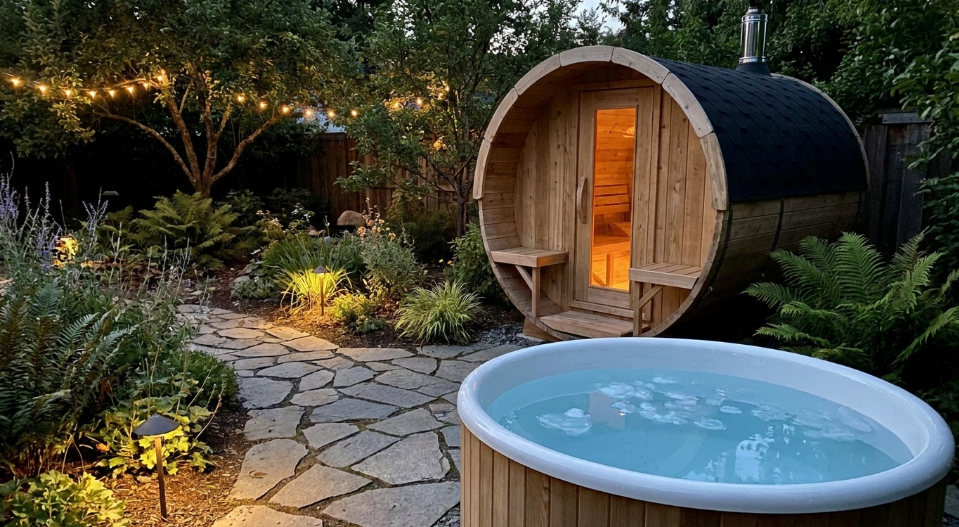

A household using an electric barrel sauna four nights a week typically spends $20 to $35 a month in electricity, less for infrared, close to nothing for wood-fired with a free fuel supply, and 15 to 25 percent more in a cold winter climate. The number depends on heater type, how many nights a week you actually use it, and where you live. Working through a couple of real use cases makes the math easier to apply to your own routine than a single average figure would.
The Baseline Case: Four Nights a Week, Electric Heat
Picture a two-person household with a 7-foot barrel and a 6 kW electric stove, used four nights a week for a 45-minute session including warm-up. That heater draws roughly 4 to 5 kilowatt-hours per session once you account for the 20 minutes it takes to bring the rock bed up to temperature. At a typical U.S. residential rate around 16 cents per kWh, one session costs 65 to 80 cents. Four sessions a week comes out to $11 to $13 a month in a mild season, and households that round up for a slightly bigger heater or longer soaks should expect closer to $20 to $35 once the full picture, including a bit of buffer for colder nights, is factored in.
The Same Household, Switched to Wood Heat
Now swap the electric stove for a wood-fired one in the same barrel, same four-night schedule. If this household already has access to a wood supply, from their own property or a cheap local source, the marginal fuel cost per session can be close to zero, dropping the monthly total from $20 to $35 down to whatever a bundle of kindling and a few logs actually costs them, often under $10 a month. If they’re instead buying seasoned firewood by the cord at $200 to $400 depending on region, the savings shrink fast, and four sessions a week can end up costing roughly the same as the electric baseline once the wood is factored at retail price rather than free.
The Same Household, in a Cold Winter Climate
Take that same four-night electric routine and move it to a region that spends real weeks below freezing. The heater now works harder against a bigger gap between the barrel’s interior and the outside air, and a well-built, properly insulated barrel typically sees per-session cost rise 15 to 25 percent over a mild-season baseline. On the $20 to $35 monthly figure, that’s an extra $3 to $9 a month, a moderate bump rather than a dramatic one, assuming the barrel isn’t undersized on heater capacity or leaking heat through a worn door seal.
The Same Baseline, Switched to an Infrared Barrel
Take the original four-night household and swap the 6 kW electric stove for an infrared panel kit instead. Infrared panels typically draw 1.5 to 2.5 kW for a two to three-person barrel, and because they warm bathers directly rather than heating the full volume of cabin air, a comparable session costs roughly 15 to 30 cents in electricity instead of 65 to 80 cents for traditional electric heat. Across four sessions a week, that works out to $10 to $20 a month instead of $20 to $35, cutting the running cost by close to half for the same frequency of use. At that point the difference isn’t really about money, since a few dollars a month rarely changes a buying decision on its own; it comes down to whether the lower, gentler infrared heat or the higher, steamier traditional session is the experience the household actually wants four nights a week.
A Lighter User: Two Sessions a Week Instead of Four
Not every household saunas four nights a week. Cut the baseline case in half, to two sessions weekly, and the electric monthly cost drops to roughly $6 to $17, scaling close to linearly with frequency since each session costs about the same regardless of how many others happened that week. This is worth knowing before you size a heater: a lighter-use household doesn’t need to buy the biggest stove on the shelf to save money, since the electricity cost was never the expensive part of ownership to begin with.
What Else Factors Into the Monthly Number
Electricity or firewood is the recurring line item people ask about first, but a couple of smaller costs ride along with it. Heater rocks lose efficiency over a year or two of regular use and cost $30 to $80 to replace. Hoop tightening, specific to barrel construction, costs nothing beyond a few minutes with a wrench a couple of times a year. If you rinse off after each session, water heating adds a few dollars a month at most. Before settling on a heater size and schedule, it’s worth pricing a couple of build styles side by side rather than guessing; the team at SweatDecks lists running-cost estimates alongside barrel dimensions and heater options, which is a faster way to compare a light-use setup against a daily one than working from a single generic average.
Is That Monthly Number Actually Worth It?
A single visit to a public sauna or day spa commonly runs $20 to $40. At that rate, a household visiting a facility just twice a month spends more than most home barrel setups cost to run for an entire month, before even counting the drive time or the membership fee some places charge on top. The upfront cost of the barrel and its installation is the real investment; the monthly running cost, across every use case above, tends to be the smallest and most predictable part of owning one once the first season is behind you.
Frequently Asked Questions
How much does a barrel sauna add to a monthly electric bill?
A household using it four nights a week typically sees $20 to $35 added, depending on heater size and local rates.
Does a wood-fired barrel sauna cost less per month than electric?
Often yes with a free wood supply, where cost drops close to nothing. Buying cordwood at retail shrinks or erases the savings.
How much more does a barrel sauna cost to run in winter?
Commonly 15 to 25 percent more per session in a cold climate, as the heater works against a bigger temperature gap.
Is running a home barrel sauna cheaper than visiting a public sauna or spa?
For anyone using it more than a couple times a month, usually yes by a wide margin, since a single spa visit often costs $20 to $40.
References
- Cardiovascular and Other Health Benefits of Sauna Bathing: A Review of the Evidence (Mayo Clinic Proceedings, 2018)
- Effects of heat and cold on health, with special reference to Finnish sauna bathing (American Journal of Physiology, 2018)
- Clinical Effects of Regular Dry Sauna Bathing: A Systematic Review (Evidence-Based Complementary and Alternative Medicine, 2018)
- Saunas and your health (Harvard Health Publishing)


 By
By